
ABOUT the FILM
LoglineA Vietnamese family escapes their war-torn country by boat after the fall of Saigon. Over 40 years later after surviving a perilous journey on the open sea, and starting a new life in a foreign land – the refugee family returns to Vietnam where they rediscover their roots, and face a traumatic past with grace, compassion, and a deep sense of hope for the future.
Meet the Tran Family
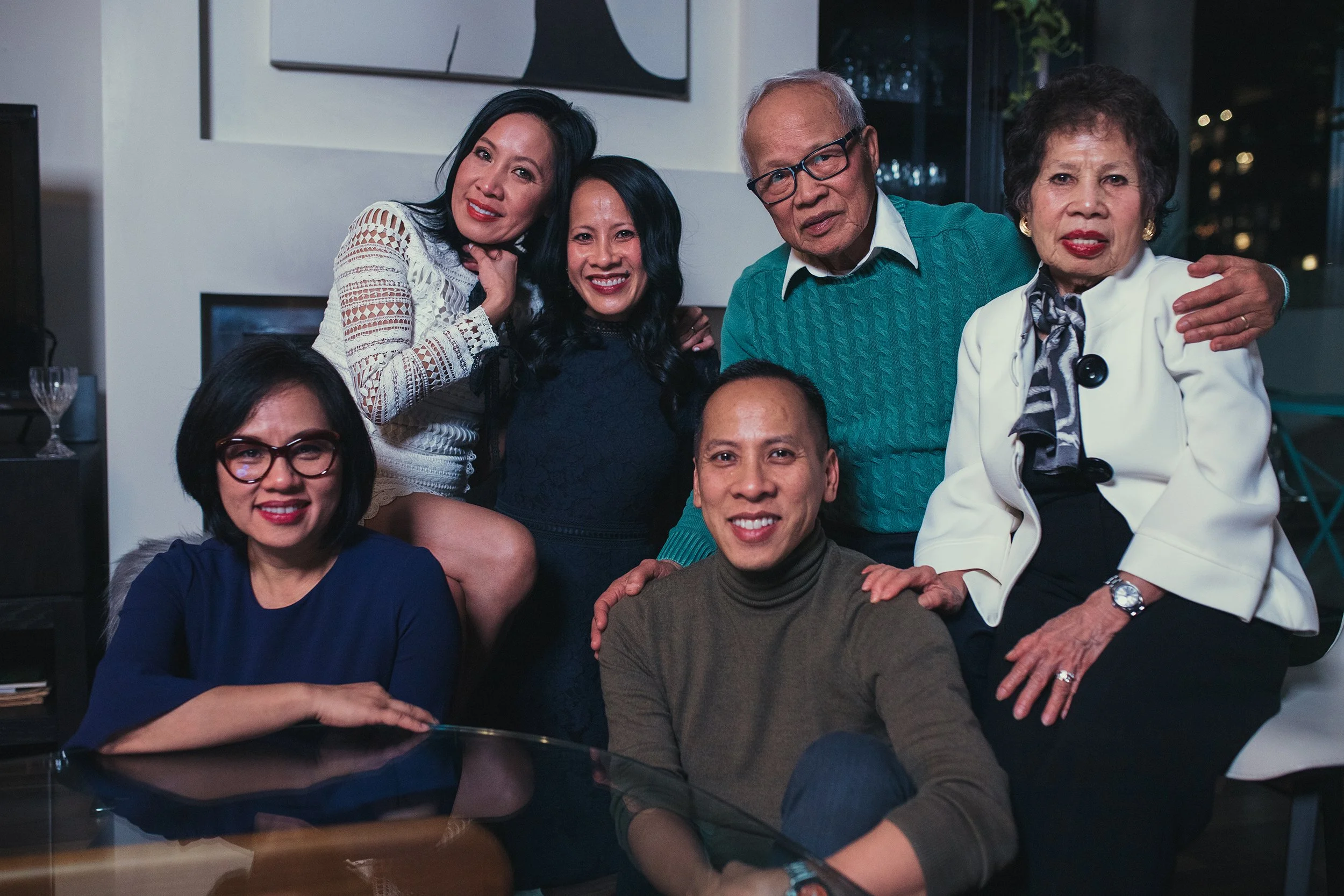
Portland, Oregon (2019). Featured, left to right: Minh-Chau Tran, Mindy Tran, Bicky Tran, Nhan Tran, Kim-Anh Tran, and Kim-Thoa Tran.
The Tran family's journey begins in Dalat, Vietnam where Dr. Bich-Ngoc "Bicky" Tran and her three siblings grew up with their parents, Kim-Anh and Kim-Thoa Tran. After the country fell to communism at the end of the Vietnam War, Bicky, 6 years old at the time, and her family successfully escaped Vietnam on a small fishing boat on their third attempt; they were defrauded by human smugglers and had their gold stolen on their first two failed attempts.
Risking their lives they faced a dangerous and unpredictable journey with the threat of bad weather, drowning, starvation, dehydration, and pirate attacks. After three long days at sea, they were rescued by German humanitarian ship ‘Cap Anamur’ on Christmas Day in 1980. They were then brought to refugee camps where they spent a year living in Singapore and Indonesia.
From there, they were eventually able to resettle in the United States where Bicky, her mother, and three siblings finally reunited with their father Kim-Anh Tran in Portland, Oregon. A year and a half earlier, Kim-Anh, a prisoner of war (POW) made a similar escape after spending three years in prison camps due to his military service as a Captain in the Army of the Republic of Vietnam (ARVN).
Too young to remember the entire experience, Bicky Tran - now an adult - sets out on a journey to discover the truth and meaning of her family’s story in the documentary film: Boat People.
Vietnamese Boat People
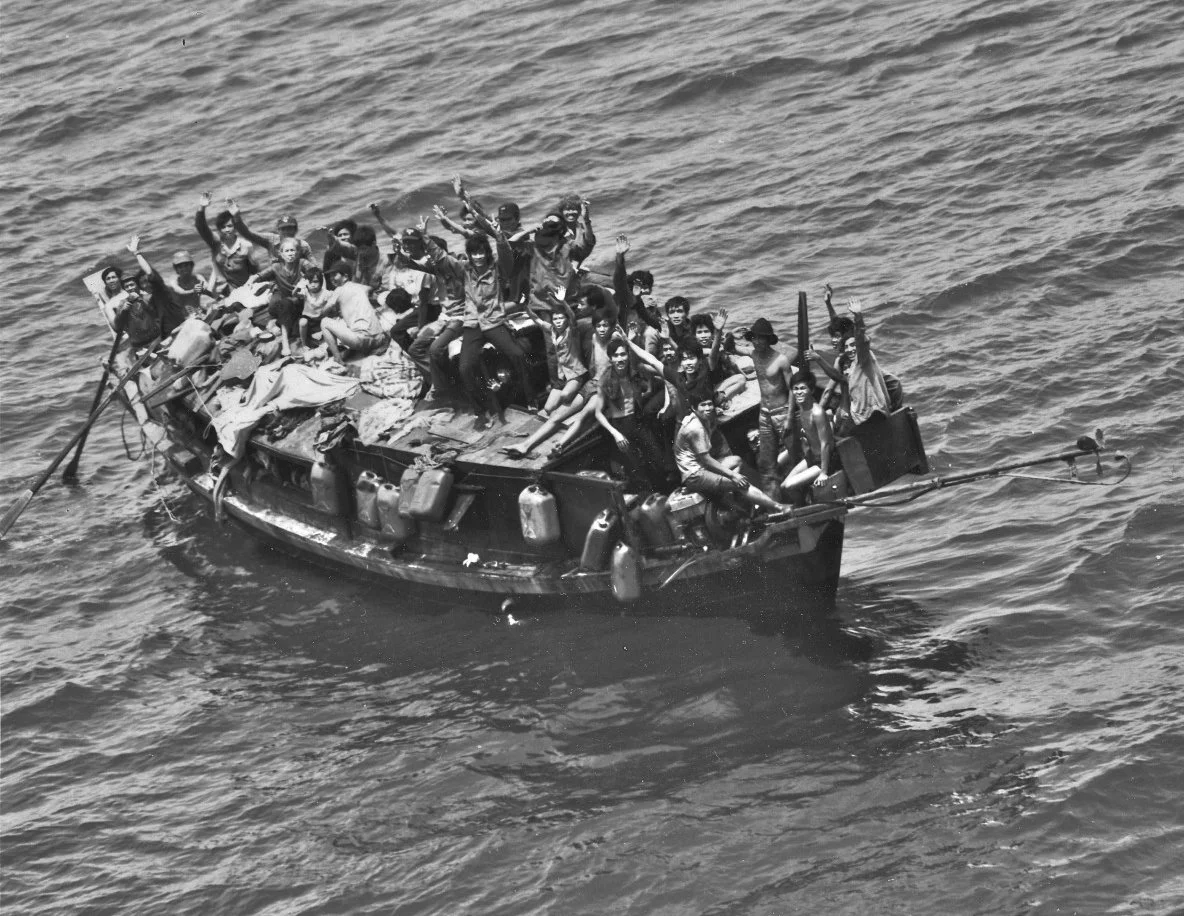
Photo courtesy of the U.S. Department of War via DVIDS (public domain). The appearance of U.S. Department of War (DoW) visual information does not imply or constitute DoW endorsement."The crew of the USS Ranger CV-61 rescued all 138 of the ‘boat people’ from the wooden boat drifting on the South China Sea."
The Vietnamese boat people were refugees who fled Vietnam by sea in the years following the end of the Vietnam War in 1975.
After the fall of Saigon, the new communist government imposed political re-education, economic collectivization, and widespread restrictions on personal freedoms. For many families - especially those associated with the former South Vietnamese government, the military, or independent businesses - life became increasingly dangerous and uncertain. With few legal pathways to leave the country, hundreds of thousands made the desperate decision to escape in small, overcrowded boats, risking everything for the chance at freedom.
Between the late 1970s and mid-1990s, an estimated 1 million Vietnamese people fled the country by sea. Their journeys were among the most perilous refugee crises of the twentieth century. Boats were often unseaworthy, with little food, water, or navigation equipment. Many refugees faced violent storms, starvation, piracy, and disease. It is estimated that hundreds of thousands did not survive the journey. Those who did were often rescued at sea or reached refugee camps in countries such as Malaysia, Thailand, Indonesia, the Philippines, and Hong Kong, sometimes waiting months or years before being resettled abroad.
The boat people eventually formed diaspora communities across the United States, Canada, Australia, and Europe, reshaping the cultural fabric of these countries. Despite the trauma of displacement, they rebuilt their lives, raised families, and carried forward memories of loss, resilience, and survival - stories that are too often reduced to statistics or overlooked in history.
Boat People is a documentary that tells the story of one such family. Through their experience, the film reflects the lives of an entire generation forced to leave everything behind in search of safety and dignity. Their journey is not just a single family’s story, but a window into the collective history of the Vietnamese boat people - a testament to human courage, sacrifice, and the enduring pursuit of freedom.
Why The Film Matters
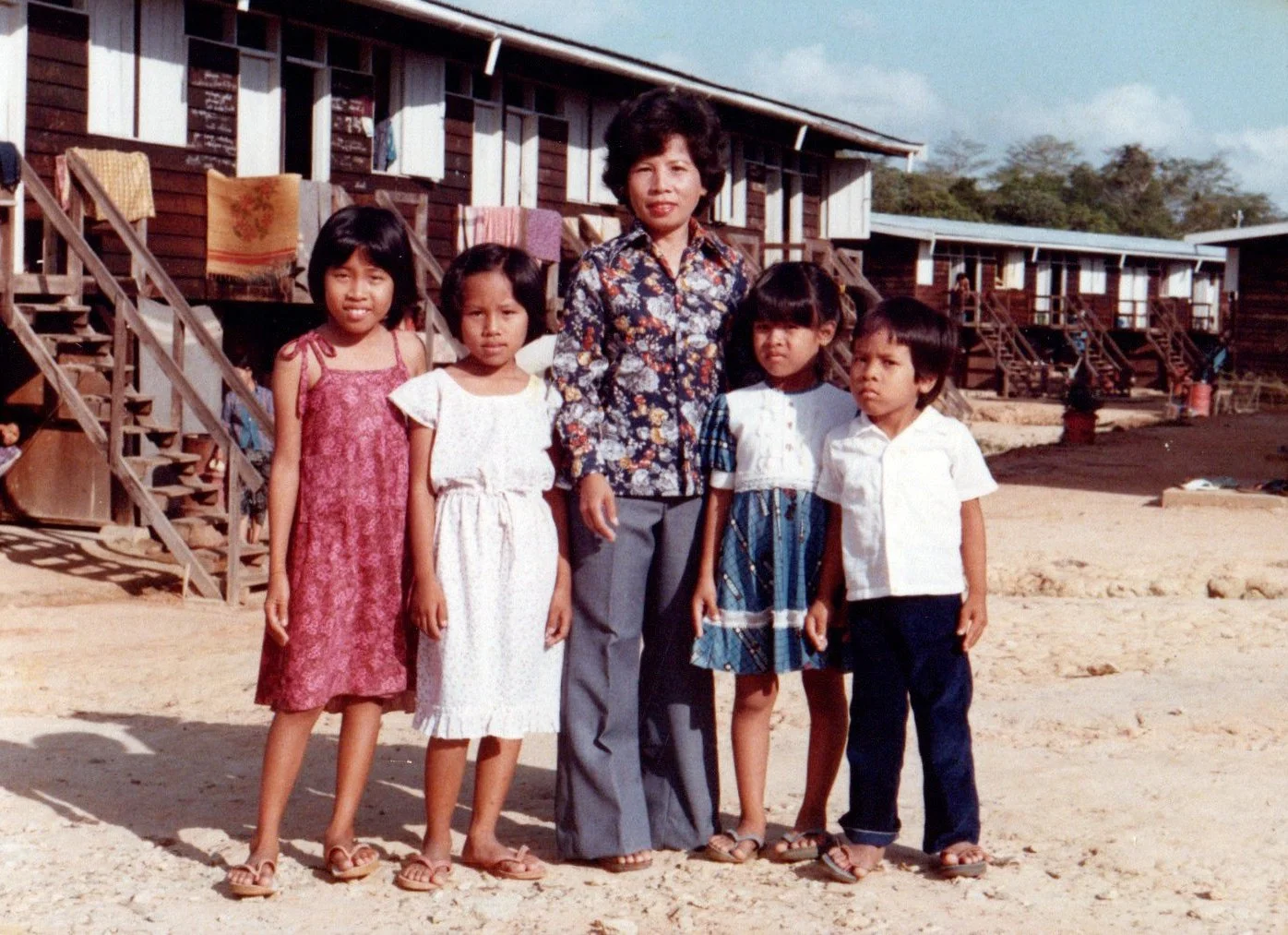
Photo of the Tran family taken during their 8-month stay in the Pulau Galang Refugee Camp in Indonesia (1981). Featured, left to right: Mindy Tran, Minh-Chau Tran, Kim-Thoa Tran, Bicky Tran, and Nhan Tran.
Boat People is more than a documentary - it is an act of preservation.
This underrepresented Asian Pacific refugee story must be preserved because it carries the lived history of an entire generation that is quickly disappearing.
The Vietnamese boat people endured one of the most dangerous refugee journeys in modern history. Yet their experiences are too often reduced to numbers, timelines, or footnotes in history books. Preserving these stories restores their humanity - honoring the parents who risked everything, the children who survived unimaginable hardship, and the families who rebuilt their lives from nothing.
Today, the children who lived through this are now in their 50s and 60s. Their parents have largely passed away or aged beyond the ability to share their memories. This is the last generation with firsthand knowledge of the escape, the refugee camps, and the difficult process of resettlement. If these stories are not recorded now, they will be lost forever.
Preserving this story matters not only for Vietnamese communities, but for all of us. In a world shaped by displacement and migration, these voices offer empathy, perspective, and understanding. They remind future generations that behind every refugee headline are real families, real sacrifices, and extraordinary resilience.
By preserving this story, we honor the past - and help shape a more compassionate future.
Your contribution helps bring Boat People to completion and ensures these voices are preserved and shared with audiences worldwide. Every donation - large or small - directly supports post-production, outreach, and impact campaigns that keep this history alive. Join us in preserving this story. Support the Film.